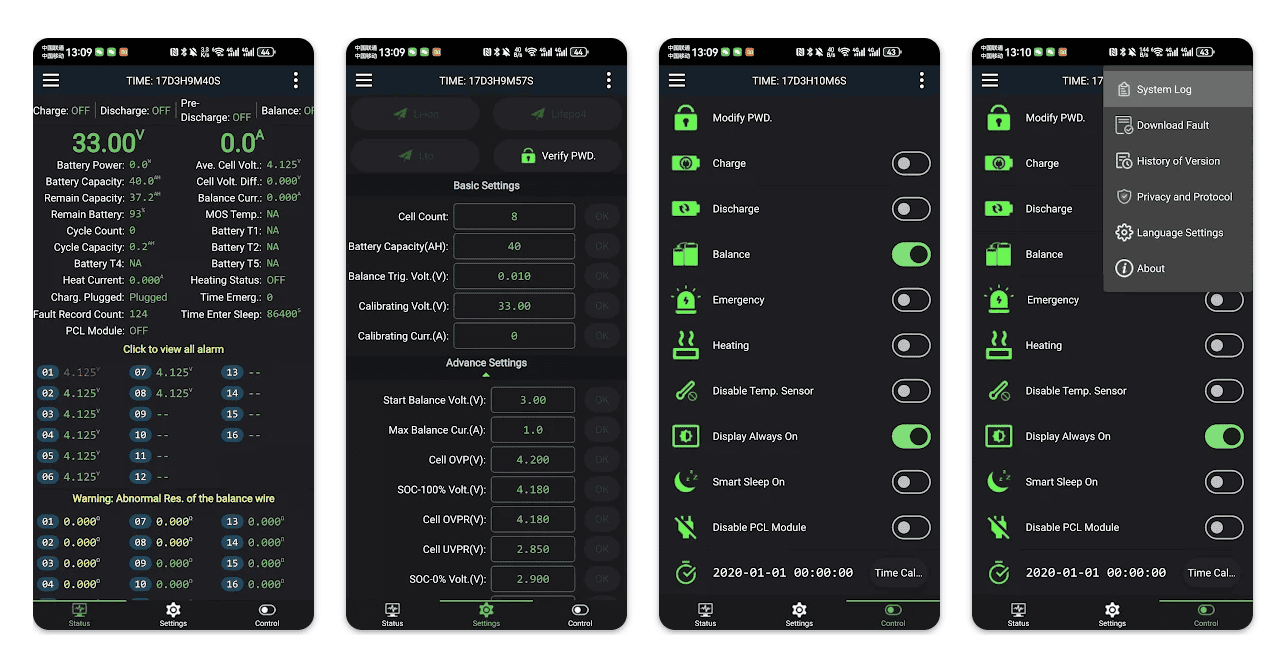
This is a question we get surprisingly often, and the answer is just the same as if you run out of fuel, put more fuel in the vehicle. With a battery, you simply put it on charge, that’s it.
The only things that can complicate this, is certain chargers need to see a voltage at the output of the charger before it will begin charging. In this case, our Daly BMS batteries will normally self restart once the load has been removed. If not, press the button on the light board to wake the battery up, this will normally force a BMS start. And if that also fails, you may need to jump start the BMS by using a jump start pack or another battery.
If you need to jump start it, always remember to disconnect other devices while doing so. Some jump start packs can output a voltage that can be damaging to other equipment. If you jump start from a regular vehicle battery, do this with the vehicle OFF, and remove the jump leads as soon as your regular chargers have started charging. Never continue charging directly from a running vehicle battery. You can also sometimes put a charger into “power supply mode” to restart the process, do this temporarily and then swap back to your regular charge profile.
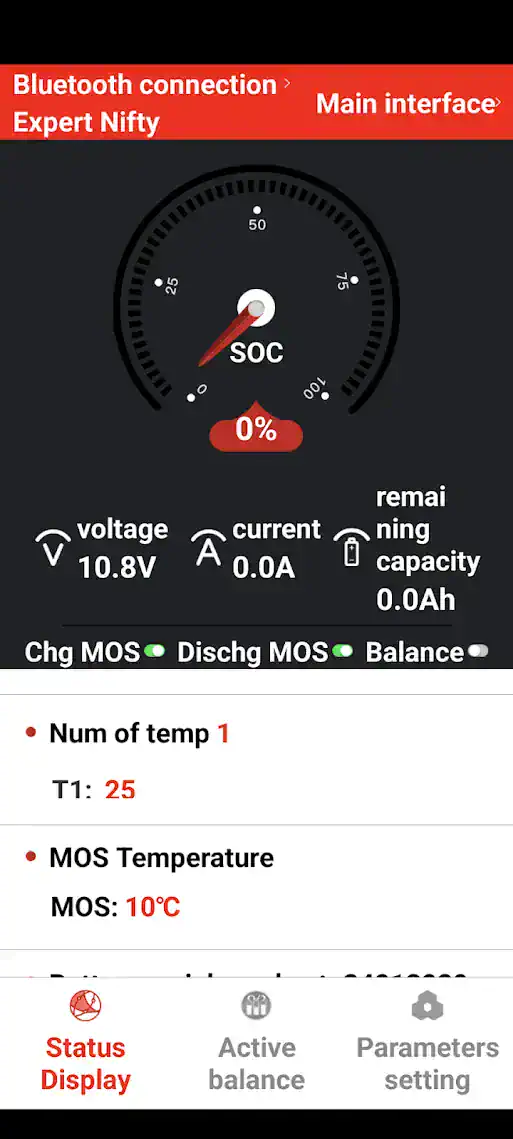
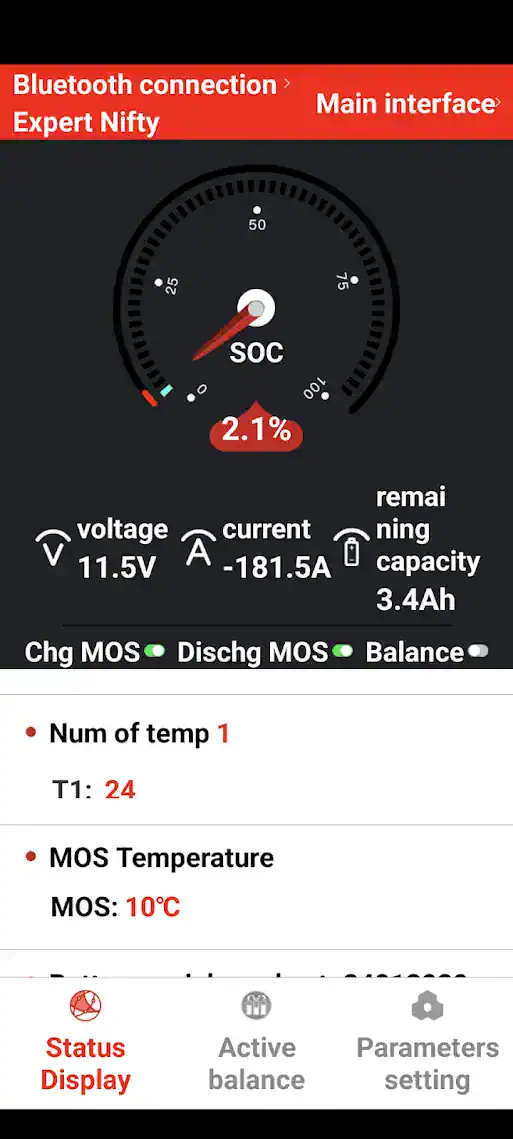
And of course if your battery is flat, it means you’ve used more energy than you have been able to put back in within a reasonable time period. So you should assess what has happened and increase charging, reduce usage, or increase your battery capacity. Battery monitors can be configured to alert you when the voltage or SOC is low. This is a warning to avoid completely draining your battery. If you’re still draining 180Ah like below, and your SOC is this low, then you may need more battery capacity.
But back to the original question… if your battery is flat, just charge it.