
Battery Management System (BMS) – What they do and don’t do…
The name of this item (BMS) is slightly misleading, as it’s really there to “Protect” the batteries from extreme conditions that would cause them damage. These extreme conditions include Over Voltage, Under Voltage, Over Current, Over Temperature and Under temperature.
Different BMS’s have different features too. Some of them are very basic, so when one of these parameters is exceeded, it disconnects the battery from the load or source (depending on if it’s being drained or charged). Some of them auto-reconnect once the fault condition has been removed. Some of them need a manual reset by applying a power source within its allowable voltage range. Some disconnect both drain and charge at the same time, and some only disconnect the item that caused the fault.
Here’s where many people have been led astray. A BMS should be the last line of defence against battery damage. It’s not there to control charging of the battery. It’s like using the rev limiter in your car to show you when to change gears, doing that will quickly kill the engine.
If your BMS has been triggered to go into protection mode, then something is wrong with your system. You should have a fuse to protect the system in the event of a short circuit. Your charger should limit both the voltage, and the current going to the battery. Your loads should shut off before the battery gets to a critical level too. Most inverters will have a low battery alarm and shut down by themselves shortly after that sounds, and this should be before the BMS shuts the load off.
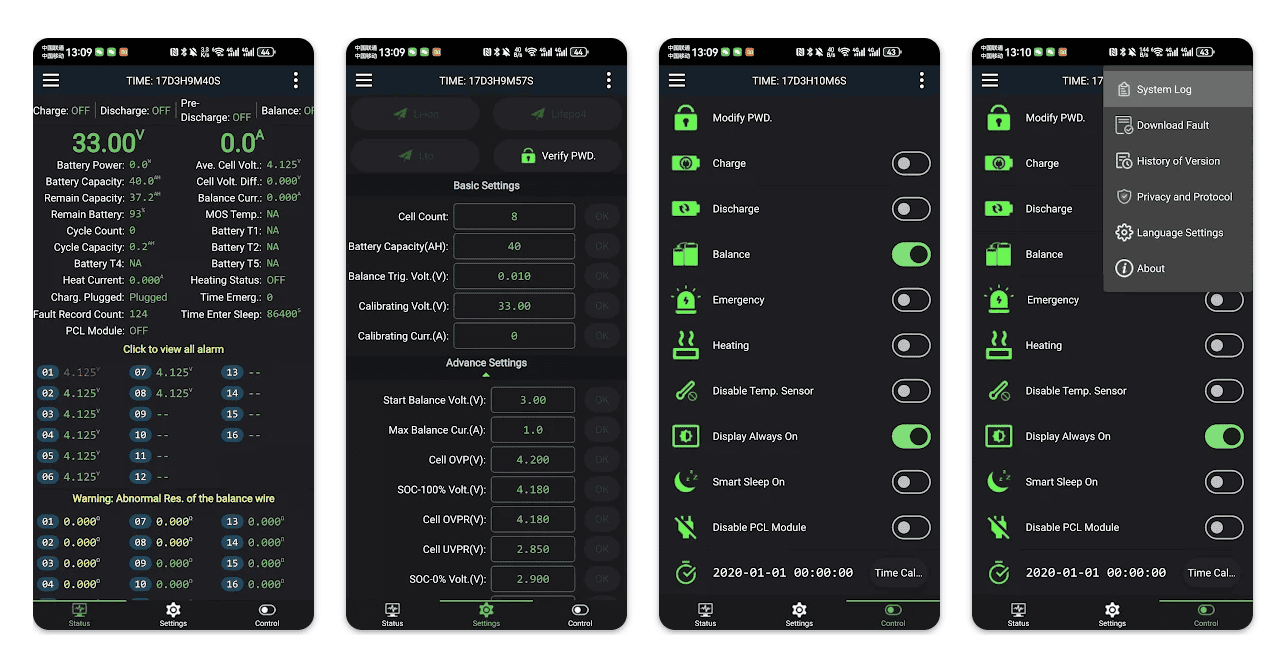
The majority of BMS’s are set and forget, however there are a few with communication ability, and some settings can be tweaked to make your system run perfectly. But these settings are still there as a safeguard against something very bad happening, due to an uncontrolled load or charge.
Many off the shelf 12.8v batteries claim to be “Drop in replacement” for AGM or other lead based batteries. While this is technically true, they can just drop in, the charging systems are not designed for LiFePO4 batteries, and therefore won’t be ideal, causing reduced life, or reduced available power. An investment in a LiFePO4 battery should include any upgrades to your system to ensure it’s charged properly.
You should set your charger to stop charging before your battery cuts off. If you have low voltage cut-off switches in your system, or inverter low voltage shut-down options, set these above what the BMS is set to. Ensure chargers don’t go over the allowable current too. These are all settings that can get complex, so seek professional assistance if you’re unsure.
So to recap… your BMS should be viewed as a fuse. If it blows, something is wrong with your system and it needs to be checked and corrected. If you frequently hit the low voltage cut-off, you need bigger battery capacity, or faster charging, or both. If you trigger the high voltage cut-off, then you need to reduce the charge voltage.