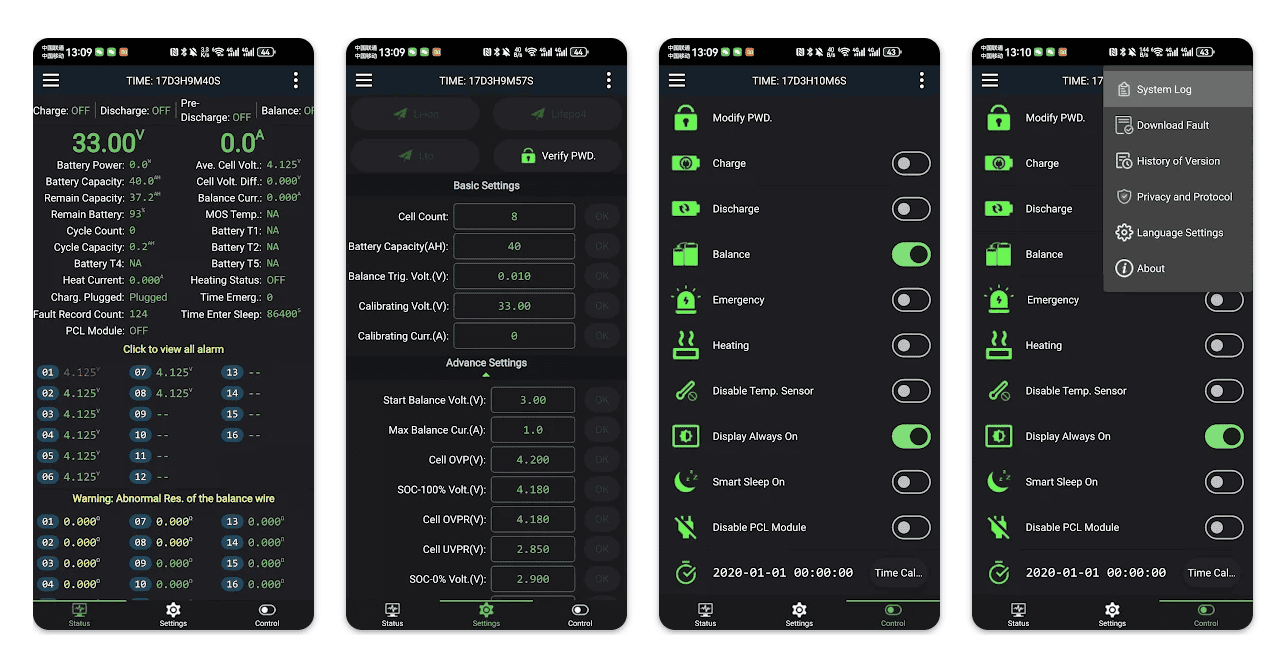
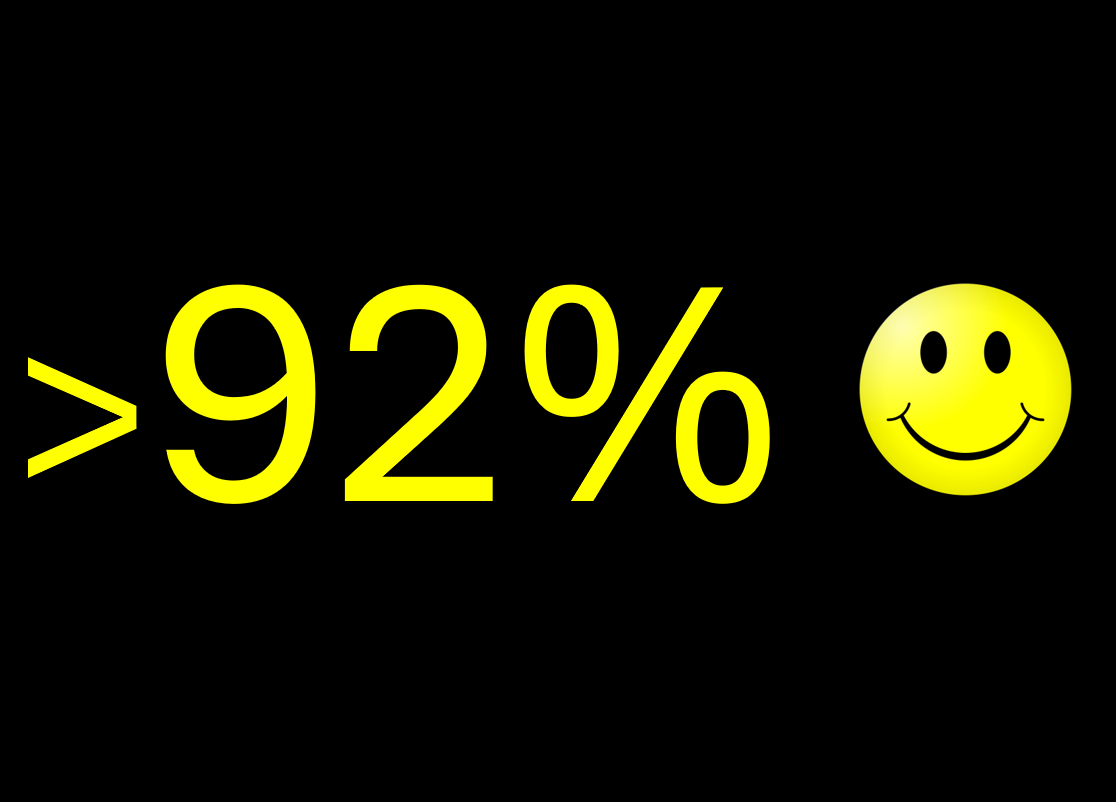
This is a milestone that we’re proud of. We’ve always tested our batteries using 100% of their capacity, and doing that twice over presents significant energy transfer/usage. Early on we implemented a DC-DC method so we “recycled” a good portion of energy, but there was still an unacceptable amount of energy lost as heat, which is compounded by needing to counteract that by cooling the room. The lost energy also needs to be replaced so that was drawn from the mains grid power.
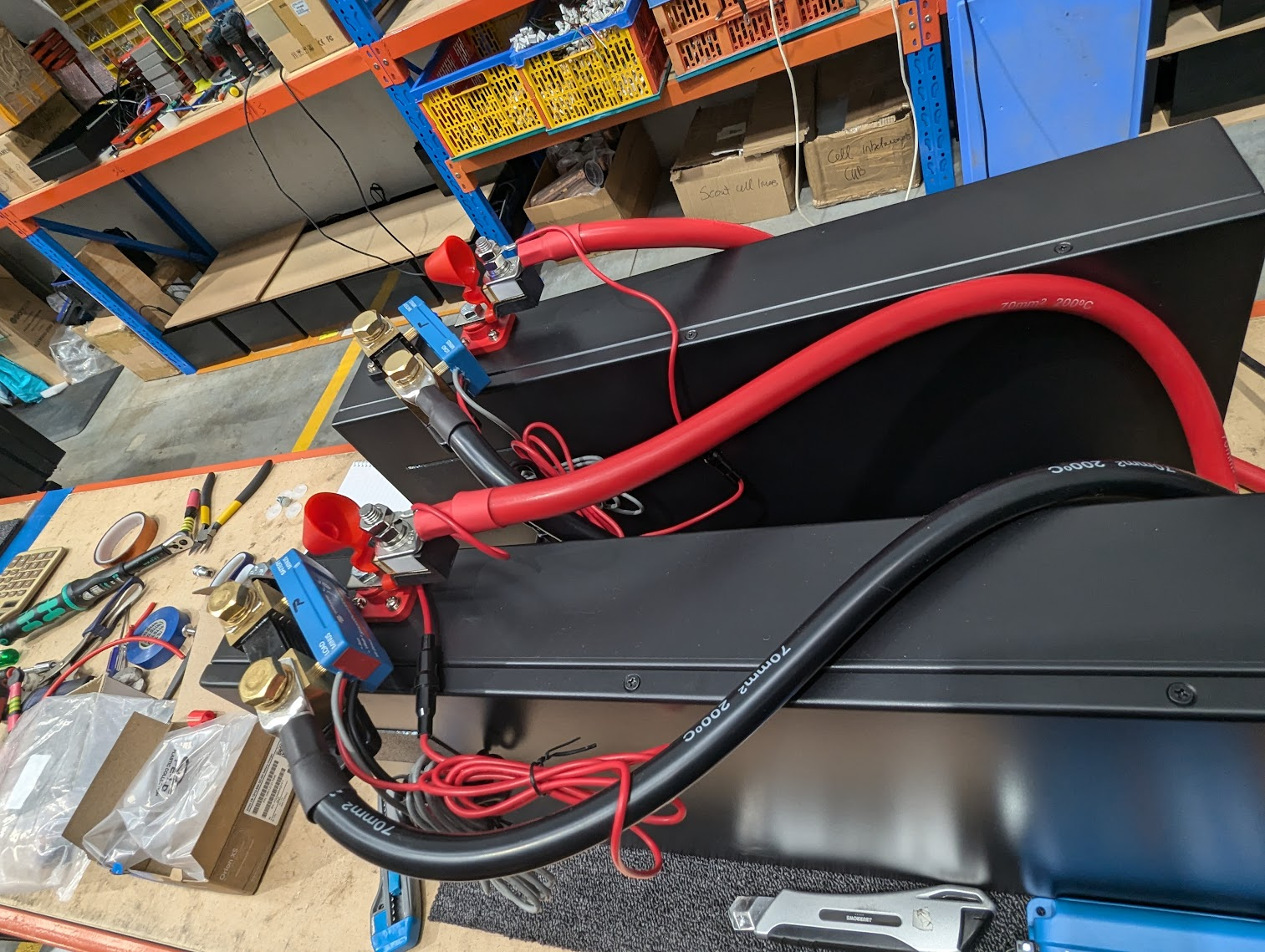
But today we tested the prototype of our revised test rig. It uses just 3 of the original components of our original test rigs, Inverter, Power Supply and Switches. The Shunt has been replaced by industry leading Victron Smart Shunts, which are more accurate and easier for us to use. The DC-DC converter has been swapped from a 60A Renogy unit, to 3 x 50A Victron Orion XS units. The cables have also been upgraded to cables once again made in-house to ensure quality and reduced losses.
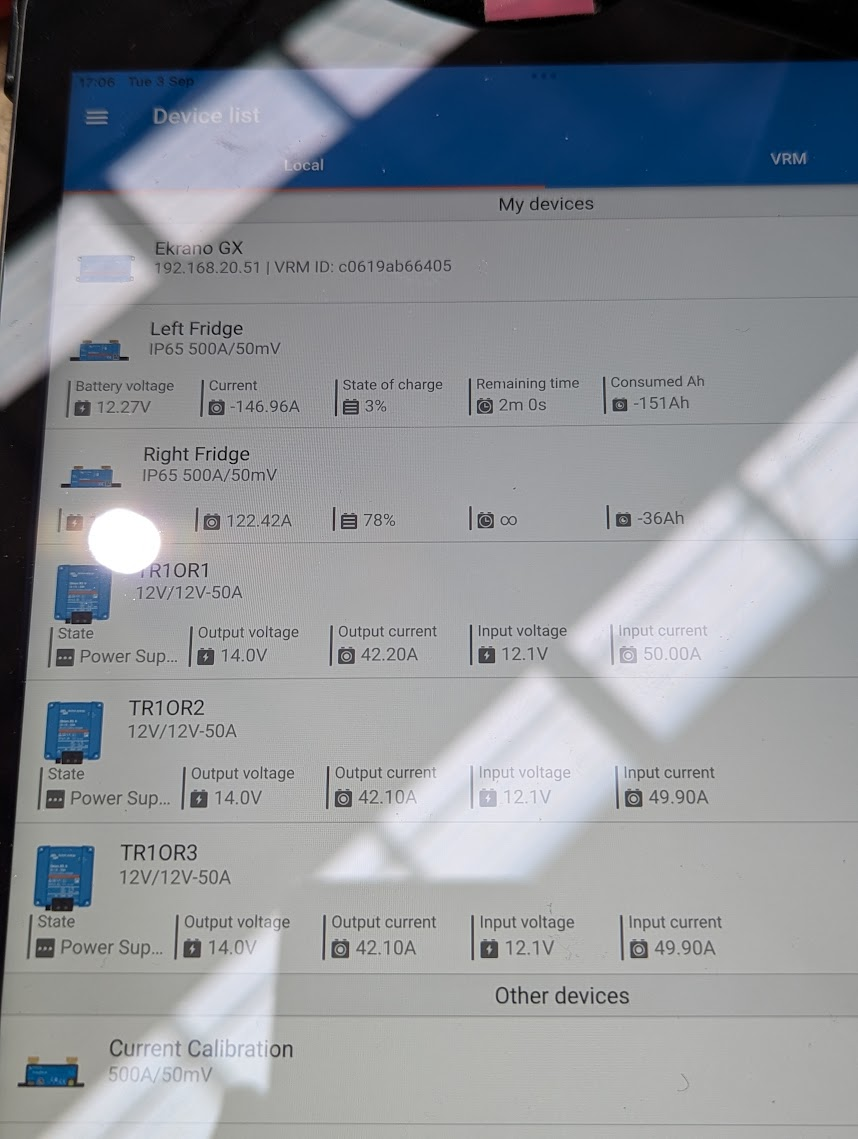
These changes do better than halve our losses. They cause less heat, less noise, are more controllable and will be more consistent, bringing higher confidence results. It simplifies wiring and slims down the test rig profile too.
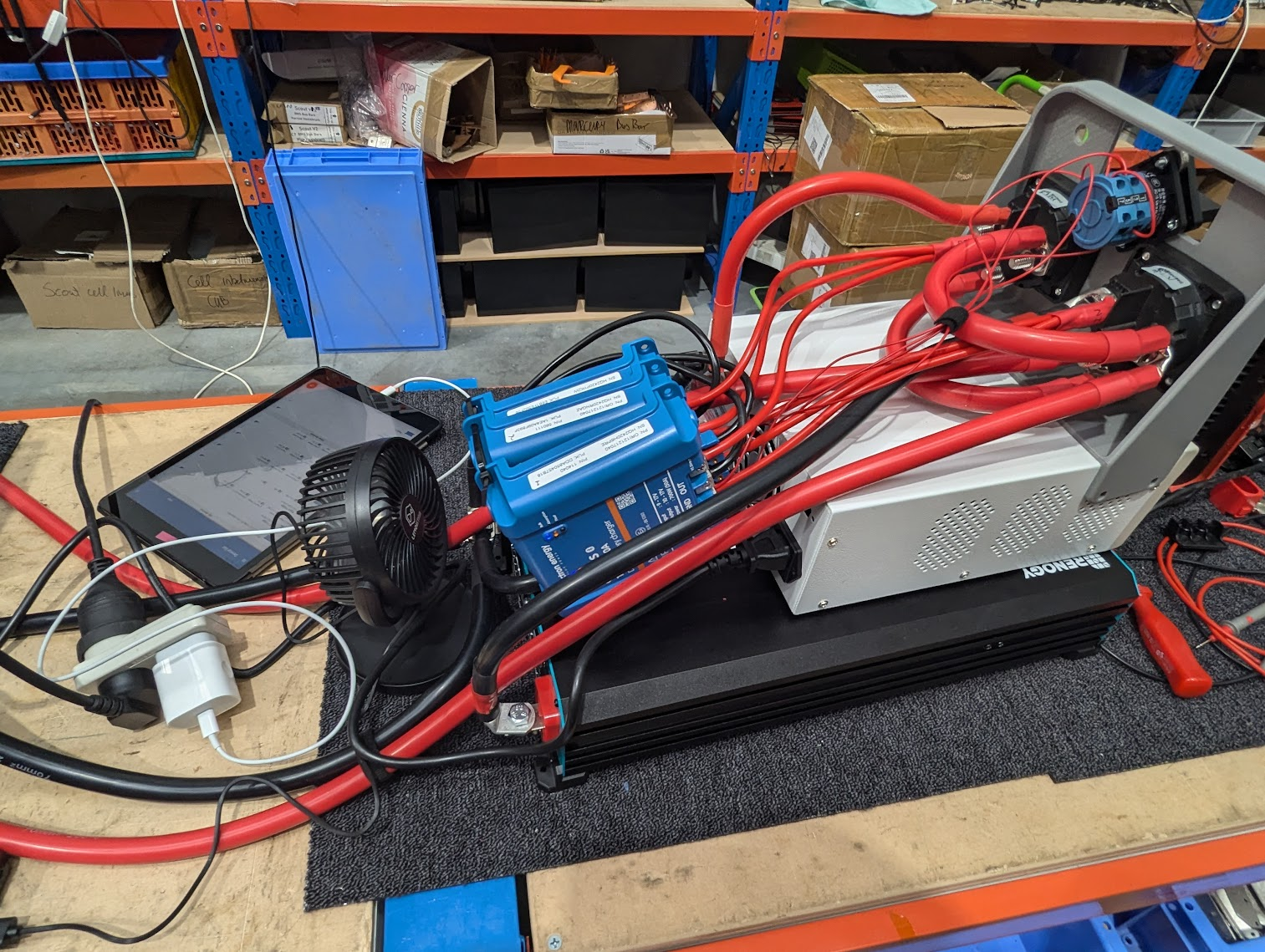
It’s not without its challenges though. It turns out the Victron Orion XS units are badly impacted by the output of our rather cheap power supplies. We expect the noise from switch-mode power supplies is causing some of the current sensing circuit within the Victron to play up. When this happens the DC-DC current drops and is inconsistent. For now we will workaround this by only using the power supply for the final top up or bulk charge when not using the DC-DC.
Next is to re-design the front panel and tablet holder, and make a triple fan forced holder for the DC-DC converter stack. Then comes the tedious task of making making wiring loom sets for every test rig. There are over 20 cables for each rig so it’s a big and expensive job, but the end results are what will keep PowerPaul being industry leading when it comes to production level testing procedures.