While I’m as rusty as an old ship, schematics and the clarity they bring is still something I still enjoy…
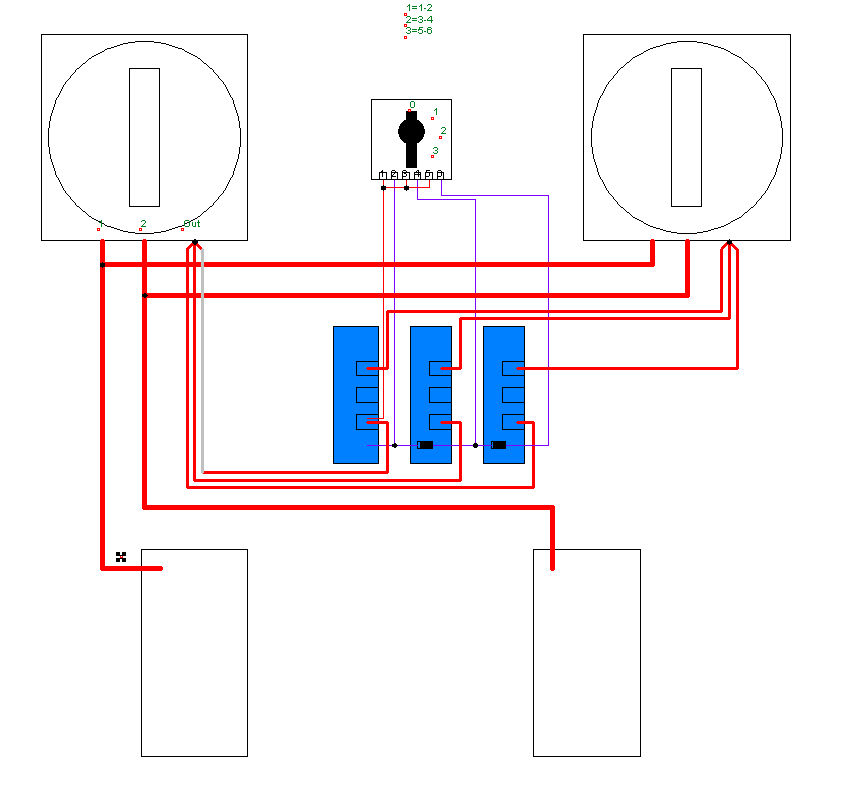
Designing the new test rigs, the circuit, the wiring sizes, as well as the physical layout is a slow and careful process. What’s above is just an early stage of the process.
But in the end the result will be a jump in electrical efficiency from between 40-80% up to a solid 95+%. This means less energy lost, and more consistent testing methods. Accuracy also gets a good boost with being able to control current better.
We get an easy switch change from 50-100-150A Discharge currents, the practical current will be slightly lower but not by much. Previously we had 30A or 60A “Charge” current which translated (due to inefficiencies) to 60-90A Discharge current. We can (and often did) add in extra 80A discharge current when required, but that was pure heat so it was wasteful.
And topping it off, we should be able to reduce the typical test time for each set of batteries down from over 5 hours to about 3 hours. That sort of time saving (40%) is huge in this industry. Time is money so these savings can go a good way to keeping labour and infrastructure costs down.
Here’s looking forward to also reducing the >$2k electricity bill down to something more palatable.